


Deconstructing the OEM Process: From CAD to Cast Iron
A technical deep-dive into the Original Equipment Manufacturing lifecycle. Understanding lead times, tooling, and the critical path.
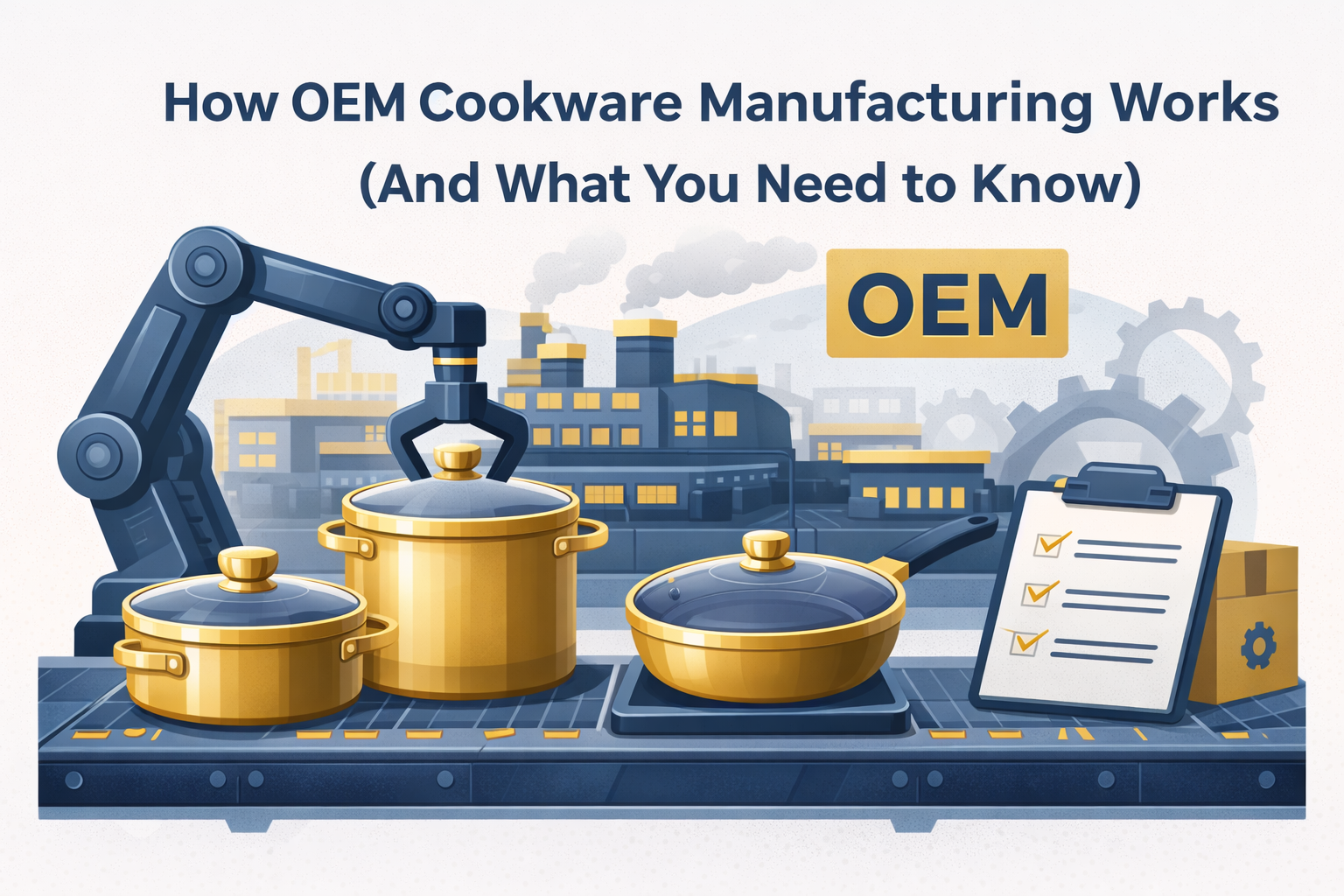
Original Equipment Manufacturing (OEM) is a complex process that involves multiple stages, from initial design to final production. Understanding the OEM lifecycle is crucial for brands looking to develop custom cookware products.
| Stage | Description | Typical Lead Time |
|---|---|---|
| Concept & Design | Initial product concept development and CAD design. | 2-4 weeks |
| Prototyping | Creation of functional prototypes for testing and validation. | 4-6 weeks |
| Tooling | Manufacturing of molds and dies required for mass production. | 8-12 weeks |
| Pre-Production | Small batch production to finalize processes and quality checks. | 2-4 weeks |
| Mass Production | Full-scale manufacturing of the final product. | 6-10 weeks |
Phase 1: Engineering & CAD (Weeks 1–4)
It starts with a file. We convert 2D sketches into 3D CAD files suitable for CNC machining and simulation. Key outputs include tolerance stacks and assembly drawings.
Phase 2: Prototyping & Tooling (Weeks 5–10)
Tooling is capital-intensive and requires a Golden Sample. During prototyping we validate fit, finish, and thermal performance.
Phase 3: Material Selection & Bonding
Premium cookware often requires clad constructions. We evaluate interior, core and exterior materials to balance durability, thermal conductivity and induction compatibility.
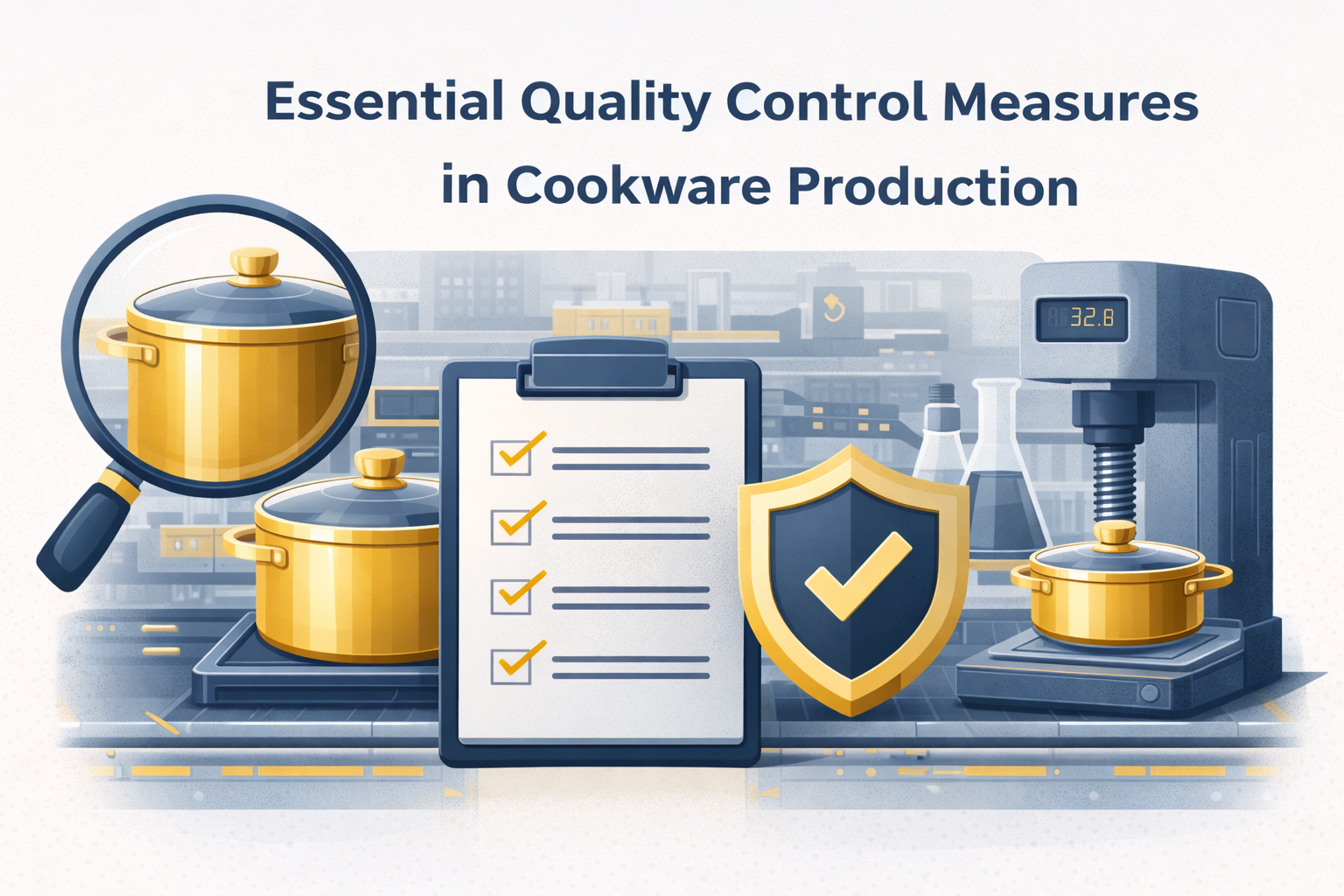
Phase 4: Pilot Production & QC
Before ramping to mass production, a pilot run validates assembly processes, cycle times, and quality checklists.
Conclusion
OEM projects succeed when engineering, tooling and quality functions work in lockstep with the brand. Clear milestones and strong communication reduce surprises and lead times.